Finding water under the kitchen sink can be alarming, especially if you do not know where it is coming from. With a few quick checks and some simple precautions, you can often limit the damage, narrow down the cause, and decide whether you can wait or need a plumber urgently.
First steps to limit damage safely
As soon as you spot a leak, your priority is to slow or stop the water and protect your cupboards and flooring. Do not start undoing pipes until you have taken a few basic safety measures.
Start by clearing out the cupboard so you can see all the pipework and the base of the unit. Remove cleaning products and electrical items like hoovers or steam mops from the area so they do not get wet.
Next, put an old towel or two on the base of the unit and place a bowl or bucket under the area that seems wettest. This helps you see how fast the leak is while keeping the spread of water under control.
Shutting off the water: stopcocks and isolation valves
If the leak is more than a slow drip, it is sensible to isolate the water supply. Many sinks have small isolation valves on the hot and cold pipes feeding the tap and any connected appliances.
Turn the little screwdriver slot or lever a quarter turn so it is across the pipe to shut it off
Run the tap to check the water has actually stopped flowing
If your dishwasher or washing machine is leaking, turn its individual valve off as well
If you cannot find isolation valves or they do not work, you may need to use the main stopcock.
Common places to find the main stopcock
The main stopcock is usually on the incoming mains water pipe. In most UK homes it is commonly found:
Indoors, it is often under the kitchen sink, in a cupboard near the front door, or in a downstairs toilet. In some properties it may be in a utility room or under the stairs.
Outdoors, you may have a stop tap in a small plastic or metal cover in the pavement or drive, usually close to the front boundary of your property. You may need a special key or a long-handled tool to turn it.
How to test your stopcock actually works
Turn the stopcock clockwise gently until it stops. Avoid forcing it, as older valves can be stiff. Once closed, check a cold tap in the kitchen or bathroom.
If the water slows and then stops, your stopcock is working. Turn it back anticlockwise to restore supply. If it does nothing or drips around the valve, make a note to have it serviced, as this can be critical in an emergency.
Pinpointing the source of the leak
Once things are under control, you can try to locate where the water is coming from. A good method is to dry everything thoroughly, then run water and watch closely.
Use kitchen roll or a dry cloth to wipe all the pipes, joints, and the base of the cupboard. Then, run the cold tap for a minute, followed by the hot tap, and if safe, run any connected appliances while you observe.
Also note whether the leak is from the hot or cold side. If it only appears when the hot tap is used, you may be dealing with a hot feed fault, which can affect how urgent the repair is.
Most common leak points under a kitchen sink
Several components under the sink are frequent culprits for leaks. Understanding what each one does helps you describe the problem clearly to a plumber.
Trap and washer problems on the waste
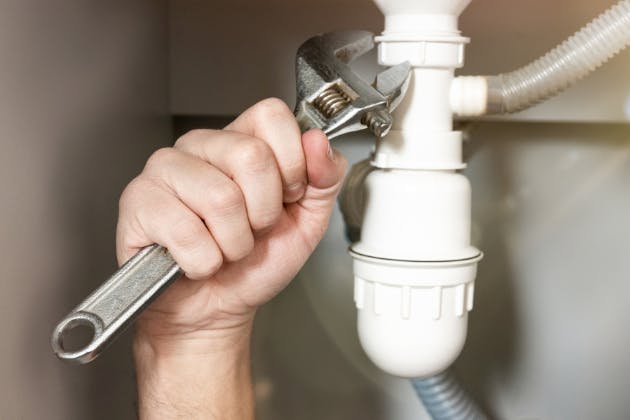
The trap is the U-shaped or bottle-shaped plastic section on the waste pipe. It holds water to block smells from the drains. Leaks here are often due to loose connections or perished rubber washers.
If you see water forming on the joints of the trap when you run the tap, gently tightening the large plastic nuts by hand can sometimes help. Do not overtighten, as this can damage the threads or pinch the seals.
Pipes, compression fittings and tap tails
The copper or flexible pipes feeding your tap are known as tap tails, usually joined to the house pipework with compression fittings. Small drips often show up as green or white staining around the joints.
If a flexible hose is kinked, rusted, or bulging, it may be close to failing and should be treated as urgent. Do not attempt to bend or twist old flexis, as they can split suddenly.
Appliance hoses and condensation issues
Dishwasher and washing machine hoses usually connect to spigots on the waste pipe and separate valves for the water supply. Look for dampness around the hose connections and any splits along the hose length.
Some modern appliances and condensing boilers can produce a lot of condensation. If their condensate pipe or internal tray overflows, it can track under units and appear as a leak under the sink even if the fault is elsewhere.
Cracked waste pipes and hidden water tracking
A hairline crack in the plastic waste pipe or the sink strainer body can leak only when the sink is full and then drained. Fill the sink halfway and release it while watching every joint along the waste run.
Water can also travel along the underside of the worktop or drip down cupboard edges before landing in the sink unit. If the base of the tap or the seal around the sink looks damp, the water may be running down from above rather than up from the pipes.
When a leak under the sink is urgent
Some situations should be treated as urgent and justify turning the water off completely and calling a plumber as soon as possible. Do not wait to see if they get better on their own.
Water coming into contact with electrical sockets, plugs, or appliances
Bulging, sagging, or swollen kitchen units suggesting serious soaking
A continuous flow of water that does not slow when taps are closed
Visible split pipe, burst flexible hose, or a cracked fitting spraying water
If in doubt, isolate the water, move electrical items away from the area, and take photos or a short video to show the plumber. This can speed up diagnosis when they arrive.
Next steps and getting professional help
If your checks suggest a simple issue like a slightly loose trap joint, you might be able to carefully tighten it yourself. Always recheck for drips afterwards and keep a towel in place for a while to be sure it has stopped.
For anything involving corroded fittings, flexible hoses, cracked waste pipes, or if you are not confident, it is safer to use a professional. A small drip can quickly turn into a bigger problem if fittings are disturbed without the right tools and materials.
Leaks under the sink can also be linked to wider plumbing and heating issues, such as pressure problems with your boiler or radiators. If you are seeing repeated drops in boiler pressure or odd heating behaviour as well as leaks, it is worth reading our radiator and boiler pressure troubleshooting guides for more context.
If you are worried about a leak under your kitchen sink or want it checked properly, contact Pegasus Plumbers Ltd on 07584495834 for expert plumbing repairs. An experienced local plumber can find the true source of the leak, carry out a safe repair, and help protect your kitchen from further water damage.